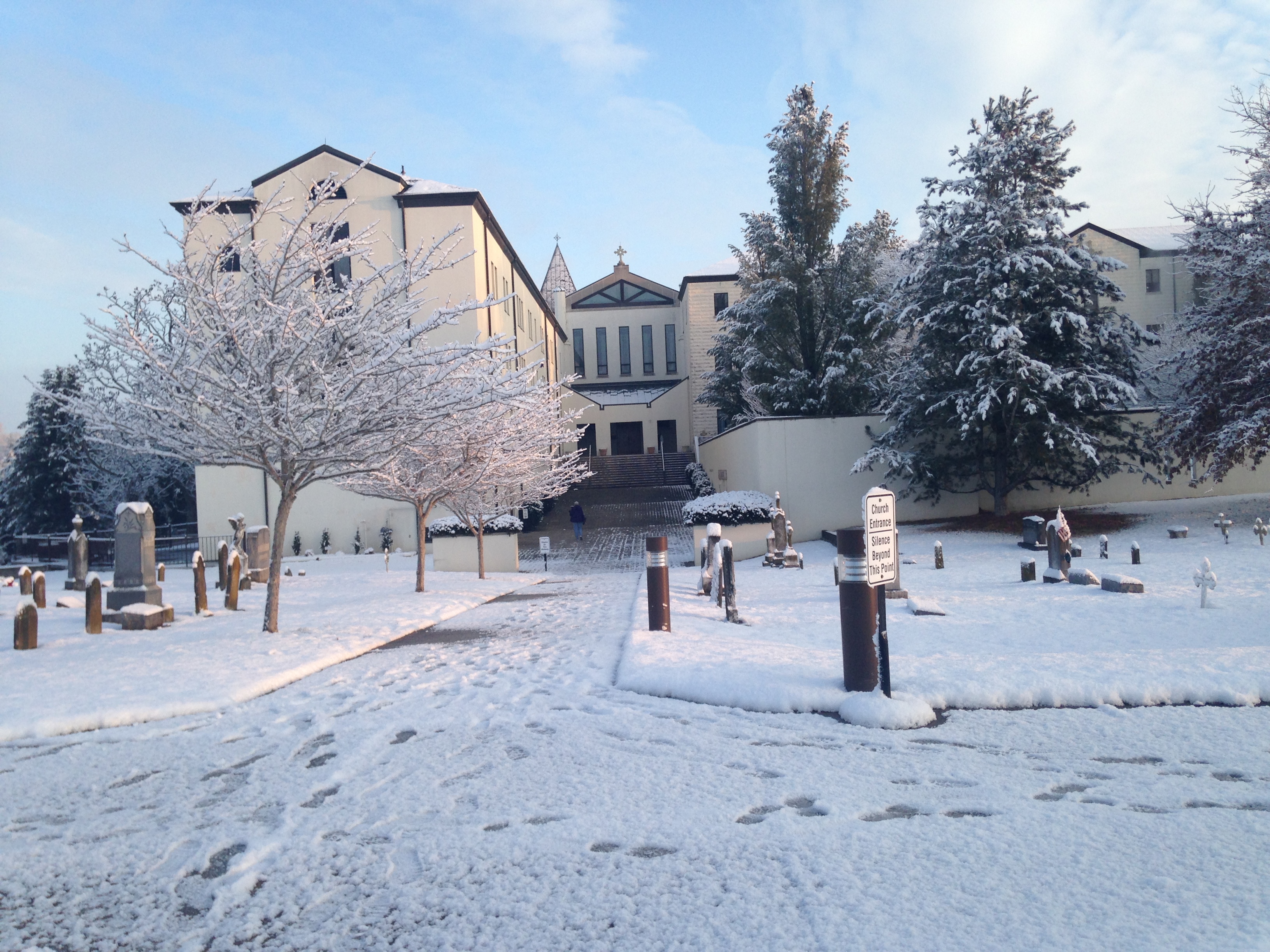
I am intrigued by the monastic life. So much so that I have visited and retreated to three different monasteries in the past year. The manner in which they pray and the silence they keep adds to the profundity of the retreat experience. I’ve learned through my experiences at each of the monasteries, each different of course, that silence is not a passive exercise. Silence is very much an ACTIVE exercise. What do I mean by this? We’ve all heard of the term “incessant chatter” in our minds. The chatter never stops and because of this, most of the world moves about on auto pilot, never really putting much thought (regardless of what you may think) into what they are doing or saying. THAT to me is being passive. It’s going about our lives allowing our minds to dictate what we do and how we react to certain situations – we’re taking a “back seat” to our minds. On the other hand, we’ve all heard the phrase, “the silence was deafening.” How can silence be deafening? By heightening our awareness to all that is! It is through silence that we become more attuned to life, to all the happenings within and around us. At times the awareness can be exhilarating and at others it can be painful but that’s part of the “work” I’m always alluding to. Silence gives us a new set of eyes, it helps us to see much better than before and it most certainly helps us in the discernment process.
During my last retreat, I began reading the Rule of St. Benedict, which is the rule monastics live by. What I read in the chapter entitled Silence was quite interesting. I always assumed that the silence of monastics had to do with “being still” in prayer. I quickly learned that there was much more to it than that. In the book The Monastery of the Heart by Joan Chittister, she outlines, in layman’s terms, the Rule of St. Benedict. Here is an excerpt from her chapter on silence:
We are expected, invited, then, to surrender the satisfaction of the too sharp retort, the too sour remark, the too common temptation to dishonesty that comes with the rattle of empty speech, of speech that is not reflective, of speech that wastes the depth of life on the mundane.
In a Monastery of the Heart, we are challenged to exchange all those empty ideas for the depth of reflection, the calm of thought, and clarity of insight that silence brings in its wake to the soul that longs – in silence- for it to come.
Silence protects us from our noisy selves and prepares us for the work of God in us. In silence we come to understand ourselves. In silence we become able to hear the voice of God calling us beyond ourselves – always to the better, always to the more.
It is of essence, then, that in a Monastery of the Heart space for silence be treasured and guarded, sought and made sacred, so that the spiritual life may grow and flourish in us – where otherwise only the weeds of empty words may take root. Amen! Truly words to live by and ponder. So rich!
I think about how this rule and my study of it has changed the way I view life, people and my relationships and I am grateful for the wisdom it has imparted. I understand the difference between confidently standing in my truth and trying to prove my truth to someone else. I understand that as long as I remain a person of integrity, my need to be “right” no longer has a hold on me. I am making a conscious effort to live by this rule and Lord knows I’ve been tested. One thing I’ve learned is that silence is much more effective than the sharp retort or the empty words and the more I have it the more I need AND want! I hope you are encouraged to be silent to allow God to do His work in you. Accept the challenge that is awareness – you’ll be amazed at the results! God bless you!